A Public Rebuke That Cuts Deep
Tamil Nadu's political corridors rarely stay quiet for long, and this week brought a sharp new flashpoint for Thalapathy Vijay's Tamilaga Vettri Kazhagam. The Viduthalai Chiruthaigal Katchi — better known as VCK and led by Dalit rights veteran Thol. Thirumavalavan — has publicly criticized TVK after the party reportedly reached out seeking political support through WhatsApp messages. According to reports from India Today, VCK described the approach as "arrogant" and went further, suggesting that Vijay himself is being misguided by those around him. It is a pointed double-barrelled rebuke: one aimed at TVK's methods, the other questioning the quality of counsel the actor-turned-politician is receiving.
What Exactly Happened
The specifics, according to reports, centre on TVK apparently circulating alliance or support requests via WhatsApp rather than through the formal, face-to-face diplomatic channels that established parties in Tamil Nadu expect. For a party like VCK — which has spent decades fighting for Dalit and marginalised communities and carries serious ideological weight within the Dravidian political ecosystem — being approached via a messaging app for something as significant as political solidarity is, in their framing, a sign of inexperience at best and dismissiveness at worst. VCK's public statement makes clear they view the episode not merely as a procedural misstep but as a reflection of a deeper problem within TVK's current leadership structure.
The "Misguided" Charge Is the Real Story
The more consequential element here is VCK's claim that Vijay himself is being misled by advisors or party functionaries. This is a narrative that supporters of Thalapathy will find familiar from his film career — the idea of a well-intentioned hero surrounded by people who do not serve him well. Politically, however, it is a far more serious allegation. It implies that TVK's strategic decisions are not entirely driven by Vijay's own instincts, and that the party's inner circle may be operating without the kind of political acumen that alliance-building in a state as complex as Tamil Nadu demands. Whether VCK intends this as constructive criticism or a calculated effort to drive a wedge between Vijay and his team is a question worth watching.
Tamil Nadu's Alliance Arithmetic and TVK's Place In It
Context matters enormously here. Tamil Nadu politics has always been defined by coalition calculus. The DMK-led alliance and the AIADMK bloc have historically absorbed smaller parties, and newer entrants must navigate carefully to avoid being dismissed as irrelevant or co-opted prematurely. TVK, since its formal launch, has positioned itself as an alternative to both dominant blocs — a third-space aspiration that requires cultivating allies like VCK, which brings a loyal and organised vote base among Dalit communities in the state. Alienating VCK this early, or allowing a perception of amateurism to take hold, could seriously complicate TVK's path to electoral credibility ahead of the 2026 Tamil Nadu assembly elections and beyond.
From Screen to Political Stage — The Learning Curve Is Real
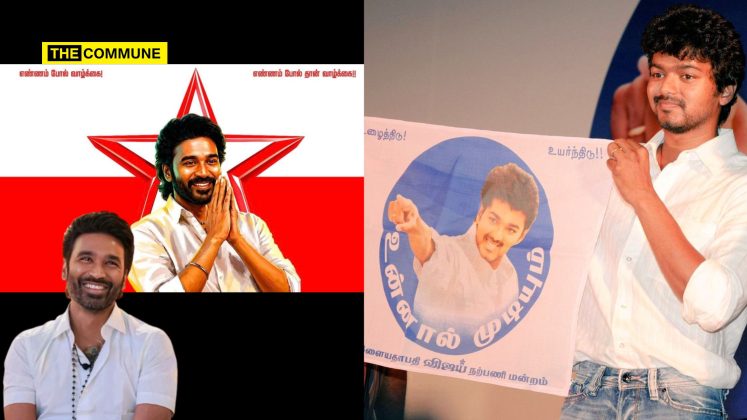
Vijay has never shied away from his transition being scrutinised. Fans who watched him deliver politically charged dialogues in Mersal (2017) and Sarkar (2018) — films that generated genuine government-level controversy — always sensed the real-world ambition beneath the fiction. His formal entry into politics and the founding of TVK was the logical next chapter. But as this episode illustrates, the craft of cinema and the craft of coalition politics operate on entirely different rules. In film, Vijay's team controls the narrative. In Tamil Nadu's political arena, veterans like Thirumavalavan have spent lifetimes learning how alliances are built, maintained, and broken — and they expect to be treated accordingly.
What Comes Next for TVK
TVK has not yet issued a detailed public response to VCK's statements, and how the party handles this moment will itself be telling. A measured, respectful acknowledgment of VCK's concerns — followed by genuine outreach — could turn a minor controversy into a relationship-building opportunity. Doubling down or staying silent, on the other hand, risks cementing the "arrogant" label in the public imagination. For Vijay, who has consistently projected humility and people-first values both on screen and in his early political messaging, allowing that characterisation to stick would be a costly image problem. The fans are watching. So is Tamil Nadu.
Spotted an error? Tell our desk. We correct mistakes openly.